Let’s paint a picture. It’s the late 1930s. The Great Depression still has a few of its fingers wrapped around America’s throat, swing music is blasting from a tabletop radio, and Studebaker—an Indiana-based carmaker that started as a damn wagon company—is throwing haymakers in the styling department like it’s the 12th round of a title fight.
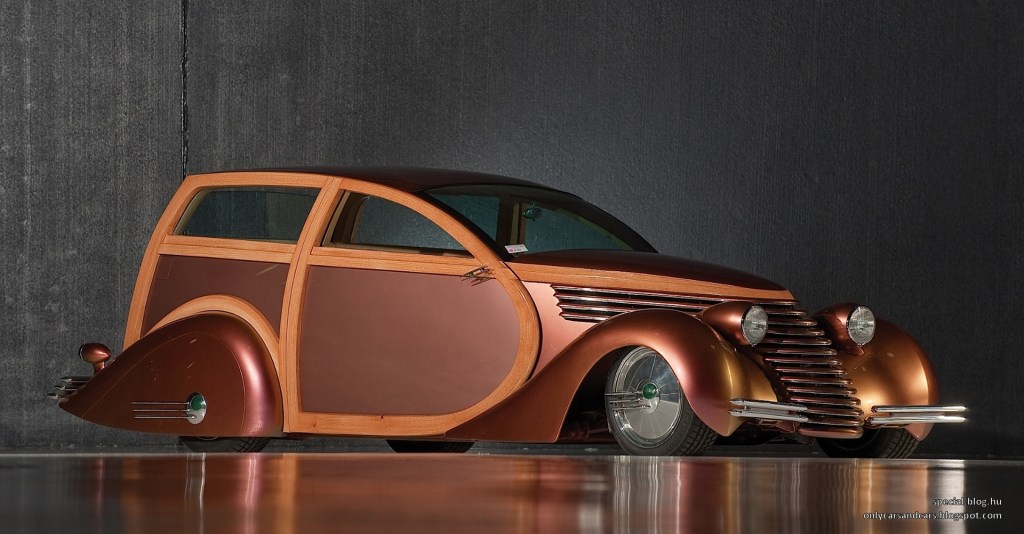
Enter the 1937 Studebaker Extreme Liner Woodie, a fever dream of coachbuilt indulgence, Art Deco flamboyance, and beach bum utility. This wasn’t a factory car. This was a custom-bodied cruiser built for someone with too much money, too much imagination, and apparently, a strong desire to turn heads at every stoplight from Miami to Monterey.
So What the Heck Is It?
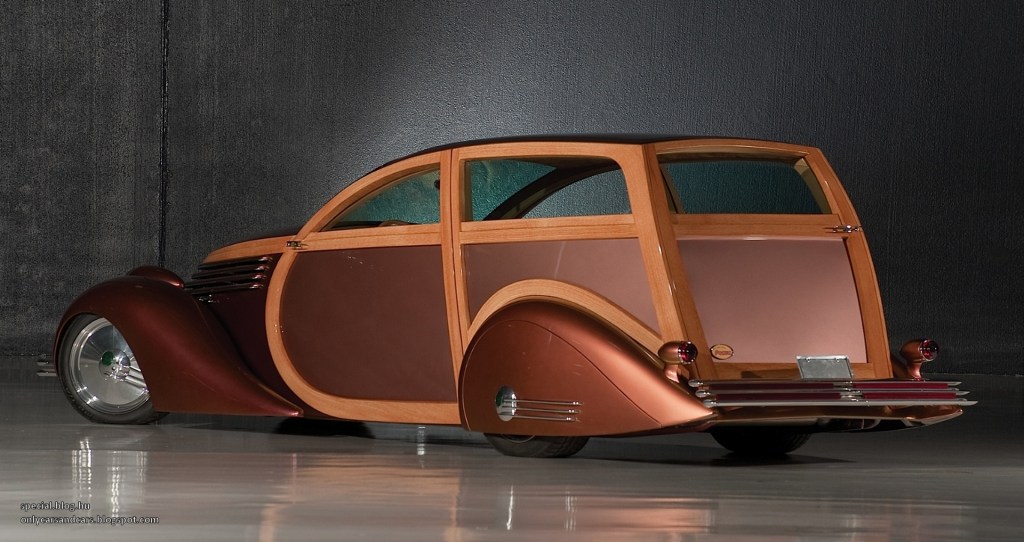
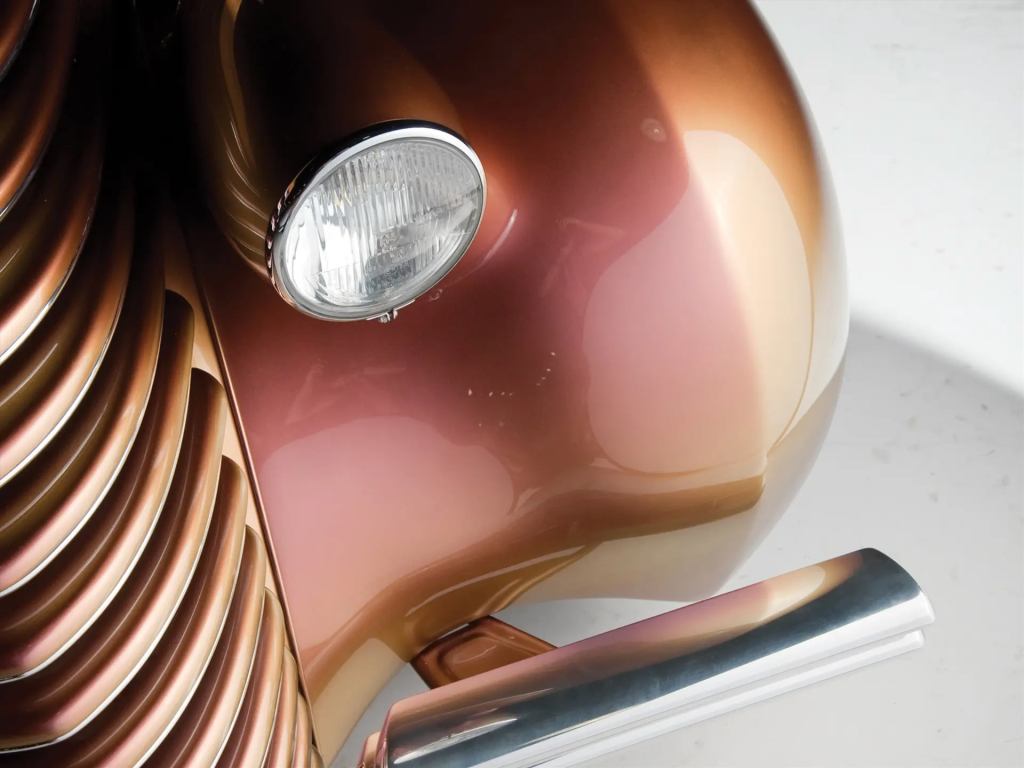
To be clear, Studebaker did not mass-produce this thing. The Extreme Liner is the automotive equivalent of a concept car that escaped into the wild—rumor has it only one or two were ever built, likely by a coachbuilder on a Studebaker Dictator or President chassis. Think long sweeping fenders, fully skirted wheels, and a rear hatch that looks like it’s trying to fold space and time. All adorned in gleaming wood paneling that makes your grandpa’s cabin look like IKEA furniture.
This car doesn’t just have wood. It is wood. High-polish, mirror-finish, bookmatched insanity with enough varnish to choke a Home Depot. The design language borrowed heavily from luxury train cars and yachts—why? Because apparently no one told the builder that you could stop at “just enough.”
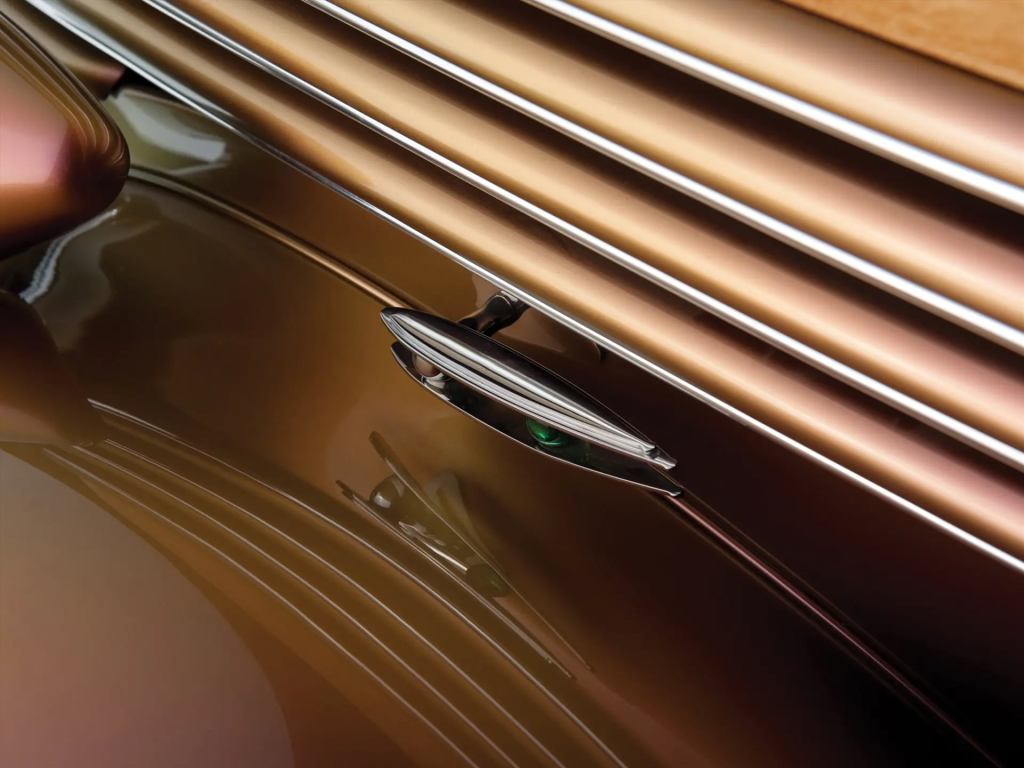
It was called the “Extreme Liner” for a reason. The entire body appears to have been sculpted with a wind tunnel and a bottle of rum. With fenders flared out like a swan in heat and chrome spears everywhere, it’s one part streamliner, one part boardwalk sideshow.
Who Would Drive This?
Picture someone who was too rich to buy a Buick but too weird for a Packard. This wasn’t for your average commuter. It was for the sort of person who thought parking next to a Duesenberg was boring and needed a car that looked like it was designed in a cartoon.
There are whispers that it might’ve been commissioned for a movie studio exec or some upper-crust eccentric with connections to the California surf scene before that even was a thing. There’s no solid record, which only deepens the mystery and fuels the obsession.
Under the Hood? Who Cares.
Alright, fine. Most likely it was powered by one of Studebaker’s straight-six engines. Maybe even the straight-eight if the builder was feeling particularly spicy. But let’s be honest—the mechanics were a footnote. This thing was built to be seen, not to set land speed records. Although, given its aerodynamic design, it probably glided like a refrigerator with wings.
Where Is It Now?
The last confirmed sighting of the Extreme Liner was decades ago. Some say it’s hiding in a private collection. Others believe it met a sad end in a barn fire or got cannibalized for parts during WWII scrap drives. If it does still exist, it’s probably sitting under a dusty tarp in some climate-controlled bunker owned by a billionaire who’s never even started it.
But sometimes, legends are better that way. Unseen, unverified—just a beautiful, bizarre blip in automotive history.
The 1937 Studebaker Extreme Liner Woodie shouldn’t exist. It’s excessive. It’s impractical. It’s gloriously dumb in the best way possible. But it proves something we all forget: cars used to be fun. Design wasn’t always dictated by wind tunnels and focus groups. Sometimes a car was built just because someone had a wild idea and the money to make it real.
And isn’t that what makes a true Hoopty legend?

Leave a comment