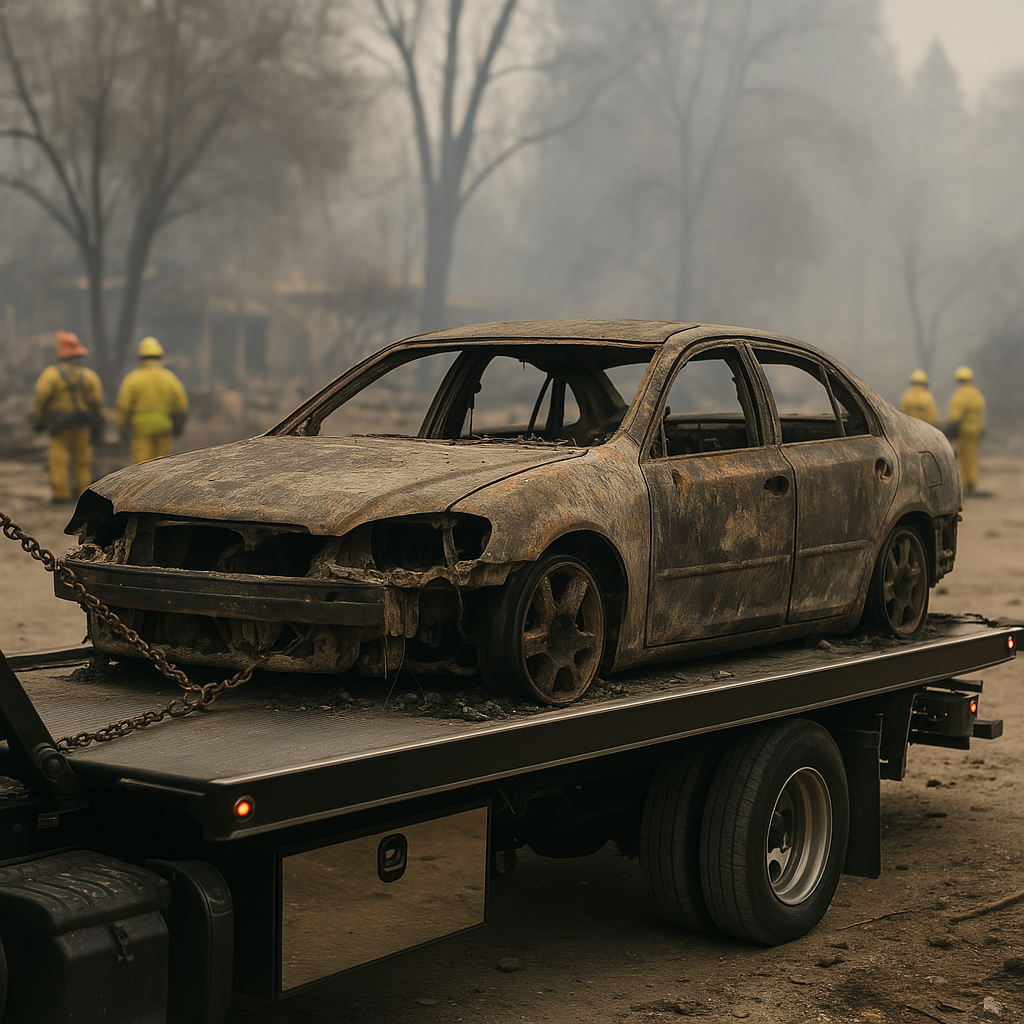
Every year, California wildfires chew through forests, neighborhoods, and entire communities like a blowtorch on a bender. Among the ruins are the scorched skeletons of cars—once shiny, functional machines reduced to melted rims and burnt-out shells. But what happens to these vehicular victims of nature’s fury once the smoke clears?
Let’s open the hood on the smoky, sooty afterlife of fire-roasted cars.
- First Responders to Fried Metal After a wildfire is contained, it’s not just firefighters who move in. Recovery crews begin sweeping through affected areas, and one of their grimmest tasks is assessing the damage to property—including cars. Some are found sitting in driveways like dystopian art installations. Others are abandoned mid-evacuation, hoods up, tires liquefied.
Depending on the level of destruction, most of these vehicles are immediately deemed total losses. Melted aluminum wheels, scorched interiors, and collapsed roofs don’t exactly scream “fixer-upper.”
- Insurance Adjusters: Grim Reapers with Clipboards If the car is insured, claims adjusters come in like CSI agents. They take photos, document VINs (if they still exist), and process payouts for owners. Wildfires are usually covered under comprehensive insurance, meaning owners won’t be left high and dry—at least financially.
Once totaled, these vehicles are usually picked up by salvage companies contracted by insurance providers. From there, the cars embark on a surprisingly busy second act.
- The Auction Afterlife Believe it or not, burned cars often end up at salvage auctions. Sites like Copart and IAA run listings with photos that look like something out of a Mad Max deleted scene.
Why would anyone buy a car that’s been through a bonfire?
- Parts: Some components, especially metal drivetrain parts like transmissions or differentials, can survive extreme heat.
- Rebuild Projects: Shady? Sometimes. Ambitious? Always. Certain buyers strip usable parts or even attempt to rebuild the car entirely.
- Export Markets: In some countries, regulations are looser. Burned U.S. vehicles might find their way overseas, legally or otherwise.
- Scrap and Recycle Many burned cars are simply beyond saving. These get hauled to scrap yards where they’re drained of any remaining fluids (if any survived the fire), crushed, and sent off for metal recycling. Steel is steel, even if it smells faintly like roasted dashboard.
Some junkyards specialize in this kind of salvage, picking through what remains like automotive vultures.
- Environmental Hazards: The Smoky Trail Burned vehicles pose environmental hazards. Melting plastics, battery acid, and scorched fuel systems can leach toxins into the soil. In newer EVs and hybrids, lithium-ion batteries bring a whole new level of post-apocalyptic spice to the cleanup effort.
That’s why California has strict protocols for hazmat teams to safely remove and dispose of fire-damaged vehicles, especially those with high-voltage systems.
- Lessons from the Ashes For all the destruction, the cycle of burned cars reveals something fascinating about the auto industry—and human ingenuity. Even in ruins, cars still hold value, from metal to mechanical guts. Each wildfire season becomes a grim reminder of climate volatility, but also a weirdly resilient chapter in a car’s life.
So next time you see a twisted, blackened frame on the side of the road or in an online auction, remember: that scorched husk once had a Bluetooth stereo, a backup camera, and dreams of long drives up the Pacific Coast Highway.
And now? It’s just waiting for its next act—or its final crush.
Got your car caught in a wildfire? Call your insurer, document everything (from a safe distance), and do not try to start or move the vehicle. That smell of scorched wiring and melted plastic isn’t just tragic—it’s dangerous.
Stay safe, stay insured, and if your ride has to go out in a blaze of glory—make sure it’s at least covered.

Leave a comment