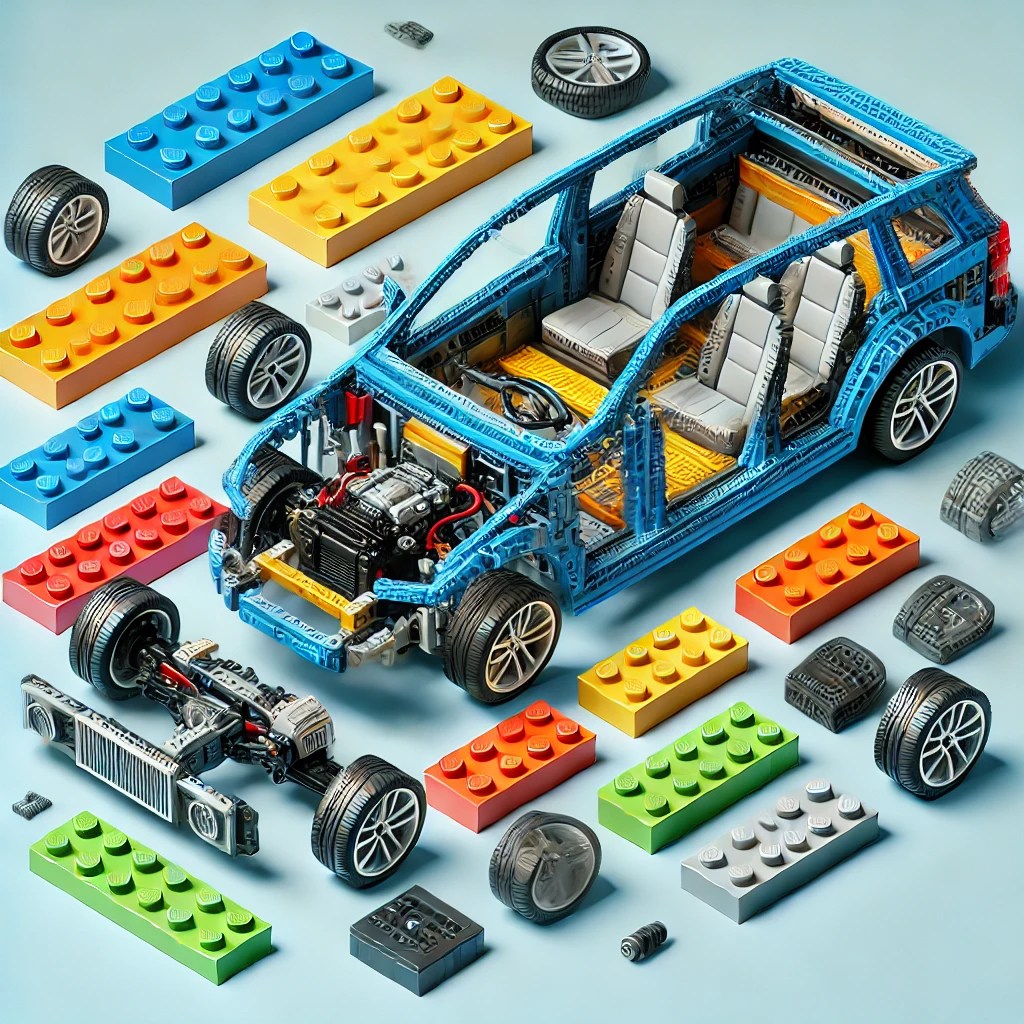
For decades, automakers treated every car like a unique snowflake. Each model was lovingly (and expensively) engineered from the ground up, making every new generation an exercise in retooling, reinventing, and occasionally breaking the bank. But then, some genius at an OEM board meeting probably said, “Hey, what if we just used the same underpinnings for everything and saved billions?” And thus, the modern global platform strategy was born.
Today, automakers rely on a handful of versatile, scalable architectures to build everything from subcompact economy cars to three-row SUVs and even pickup trucks. It’s a little like LEGO—just snap different bodies, interiors, and powertrains onto the same foundation, and voilà, a “new” car is born!
The Global Platform Revolution
The idea isn’t exactly new. Automakers have toyed with modular designs for years, but in the last two decades, global platforms have become the industry standard. Here are some of the biggest names in the game:
Volkswagen’s MQB Platform – The One That Started It All
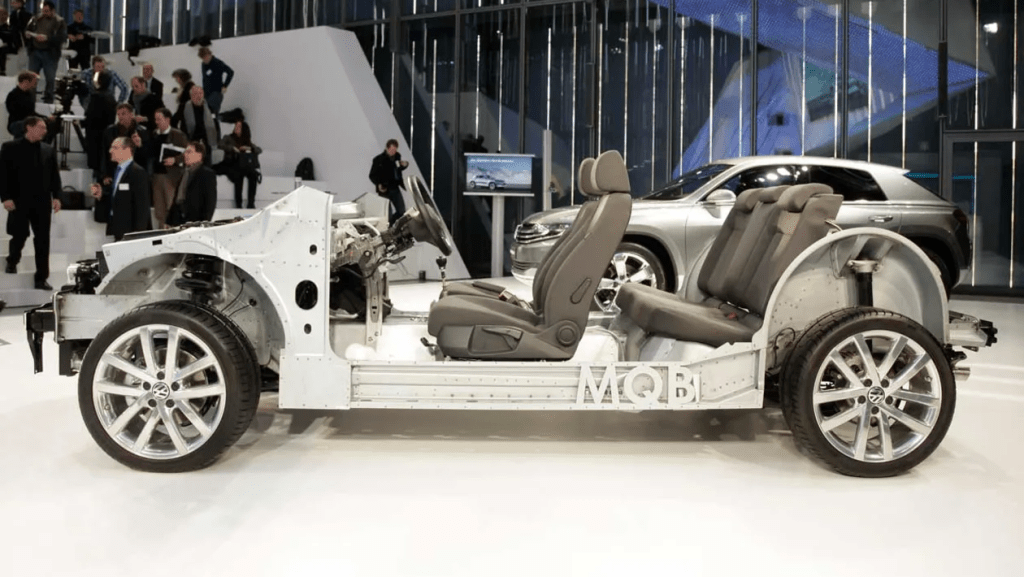
The Modularer Querbaukasten (MQB) platform—because everything sounds fancier in German—was one of the first global platforms to prove just how much automakers could save by streamlining development. Launched in 2012, MQB is the foundation for everything from the Volkswagen Golf to the Audi TT and even the Atlas SUV. VW took it a step further with the MLB (longitudinal) and MEB (electric) platforms, allowing everything from gas-powered sedans to electric vans to share core architecture and therefore components.
Ford’s Global Platform Push – One Size Fits All
Back in the day, Ford was notorious for its regional approach, meaning different platforms for different continents. That was until the company had a lightbulb moment: Why not just sell the same Focus, Fusion, or Escape worldwide? This led to Ford’s aggressive push for global platforms, particularly under former CEO Alan Mulally’s “One Ford” strategy. The result? The Ford C2 platform underpinned everything from the Focus to the Bronco Sport and Maverick.
Toyota’s TNGA – The Camry’s Secret Weapon
Toyota finally jumped on the modular bandwagon with its Toyota New Global Architecture (TNGA). This platform now underpins a vast majority of Toyota’s lineup, including the Corolla, RAV4, and even the Camry. The result? Toyota cars now drive less like appliances and more like, well, actual cars with some semblance of road feel.
Stellantis & the “Merge Everything” Plan
After the FCA-PSA merger, Stellantis found itself with a buffet of platforms from Jeep, Dodge, Peugeot, Citroën, Fiat, and more. The solution? The STLA platforms—modular architectures designed to unify their hodgepodge lineup under four scalable bases: Small, Medium, Large, and Frame (for trucks and SUVs). A Dodge muscle car and a Peugeot econobox might not have much in common, but thanks to STLA, they’re at least speaking the same engineering language.
Why Automakers Love Global Platforms (Spoiler: $$$)
The appeal of a global platform isn’t just about simplifying engineering—it’s about maximizing profits. Here’s how:
- Cost Savings: Developing a car from scratch costs billions. Reusing a platform slashes R&D, tooling, and supply chain costs.
- Faster Development: Why reinvent the wheel (literally) when you can just modify an existing platform and get a car to market faster?
- Flexibility: A single platform can spawn dozens of models across different brands and segments.
- Global Manufacturing: Automakers can build multiple models in the same factory, reducing logistical headaches.
The Drawbacks – When Too Much Sharing Goes Wrong
Of course, there are downsides.
- Same-Same, but not Different Driving Experience: Ever wonder why different brands’ cars feel eerily similar? It’s because under the skin, they often are the same car.
- Recalls Become Global Disasters: If one component has a flaw, an entire lineup across multiple brands and continents might be affected (see Volkswagen’s Dieselgate, or Ford’s infamous dual-clutch transmission fiasco).
- Brand Identity Gets Murky: If your Audi A3 is basically a VW Golf in a tuxedo, is it really worth the premium price?
What’s Next? The Electric Era & Beyond
With EVs taking over, global platforms are more crucial than ever. Instead of designing unique chassis for every electric car, automakers are launching dedicated EV skateboards—essentially flat, battery-packed platforms that can be adapted to everything from sedans to SUVs. Volkswagen’s MEB, Hyundai’s E-GMP, and GM’s Ultium are already proving that the modular approach is here to stay.
In the end, global platforms have transformed car manufacturing into a high-stakes game of LEGO. And while it might not be as romantic as the bespoke engineering of yesteryear, it’s keeping automakers profitable, cars more affordable, and warranty departments very, very busy.

Leave a comment